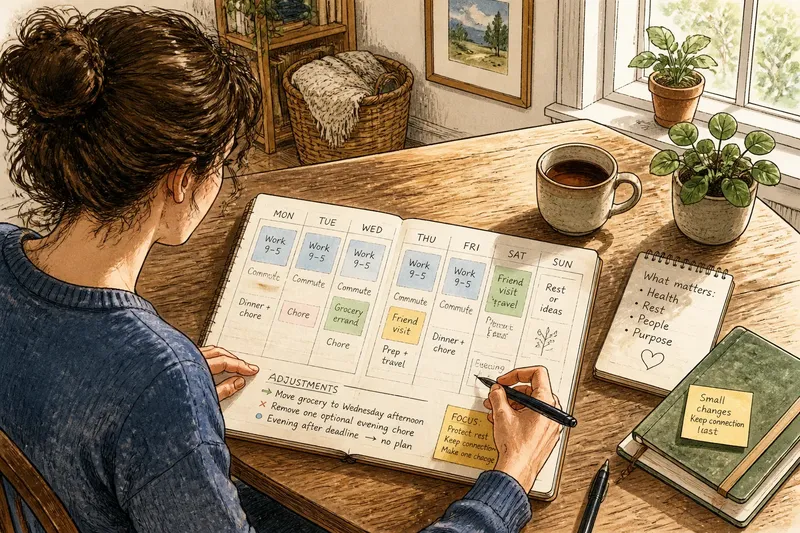
Why a Pause Between Tasks Helps Mark a Transition
A pause between tasks helps you set down unfinished work and begin the next task with a clear first action, without adding another chore to your day.

How do you stop carrying an unanswered email into lunch, or a half-finished report into a conversation? A pause between tasks can make the handoff visible. It is less a miniature break than a way to leave a useful marker: what is still open, and what deserves your attention now?
Read the handoff
Work can continue in your attention after you have closed the file. A message with a sharp tone may linger while you prepare food. An unfinished paragraph may keep tugging at you while someone is speaking. The change on your calendar is not always a change in focus.
Before choosing a cue, decide what kind of handoff you are making. A task may be complete, paused, or displaced by something more urgent. Those states are not interchangeable. Calling a paused task “done” can make the return confusing; calling it paused gives you a more honest place to resume.
Choose a recognizable boundary: after sending a message, before opening another document, or when you leave your desk. Do not wait for a calm interval that may not arrive. A useful cue fits the day you actually have.
Leave a return marker
If the first task is unfinished, write down the next move in plain language. “Revise the opening paragraph” is easier to return to than “continue report.” If a decision is blocking you, note the question instead. The point is not to record the whole task, but to leave a marker that tells you where to pick it up.
For a task that is complete, no note may be needed. For one you are handing to someone else, the marker might be a brief message stating what is done and what remains. Keep the record proportional: paperwork that takes longer than the handoff is not earning its place.
Say you are revising a report when a call comes in. You have written the opening but have not checked the figures, and your next work block will start with that check. You jot “opening drafted; check figures next” beside the file name, then answer the call. When you return, the note points to the unfinished part without implying the report was complete.
Name the next action
Once you have marked what is ending, choose a first action for what follows. “Work on the project” leaves too much interpretation. “Open the meeting notes and draft the first question” gives your attention a place to land.
For a personal task, be just as concrete: put groceries away, set out a cutting board, or listen while a friend describes an appointment. Naming the action does not make the plan permanent. If something urgent changes the order, choose again and mark the new handoff.
One sentence can hold both sides: “I am setting the budget aside until tomorrow and going to lunch.” The words can stay private. When another person is involved, saying them aloud may help clarify that you are shifting your attention rather than continuing to work in the background.
Use a quiet cue
Choose a small physical action that fits the transition. Close the browser tab, put the pen beside the notebook, rinse a mug, or turn your chair toward the person you are speaking with. The cue should mark the boundary, not become a performance you have to get right.
Some handoffs need little more than a breath and a sentence. Others call for a moment to collect materials or note an open question. A pause is not useful because it produces a particular feeling; it is useful when it makes the change in attention easier to see.
It is not worth adding a special object, elaborate breathing sequence, or strict ritual if you then avoid using it on a busy day. A quiet cue that takes no planning is more likely to fit an ordinary handoff.
Choose a response?
What if I cannot decide what comes next?
Check your task list and the time available, then choose a task that fits both. If a priority is unclear, leave the previous task marked as paused and take a short moment to decide rather than pretending the choice is settled.
Should I use my phone during the pause?
Use it if the next task requires it, such as checking a calendar or sending a handoff message. If opening it is likely to lead to unrelated messages or a feed, set it aside until the transition is complete.
What if I forget to pause?
You do not need to recreate the missed moment. Name the task you are entering now and take its first concrete action; if the earlier task is unfinished, leave a return marker when practical.
Does every task need a pause?
No. A handoff is most useful when tasks compete for attention, when work remains unfinished, or when another person deserves a clear shift in focus. For two simple actions that already flow together, adding a ritual may create friction without clarifying anything.
Check the fit
For a few days, notice which handoffs leave the previous task echoing into the next. Try one cue at a boundary you encounter often, then use what happens to decide whether to keep it. These checks can make the choice concrete:
- If you can name the previous task’s status, move on; if you cannot, write “complete,” “paused,” or “handed off” before beginning.
- If an unfinished task has a clear next move, leave that note and switch; if not, record the question that must be answered when you return.
- If the next task has a visible first action, begin it; if not, check your list and choose one action that fits the available time.
- If a person is waiting for your attention, put away the device or work materials; if you need them for the conversation, keep only the relevant item open.
- If checking your phone serves the next task, use the needed app and stop there; if it invites unrelated input, leave the phone aside until the handoff is complete.
- If the cue takes longer to arrange than the transition needs, simplify it; if a small action makes the boundary clearer, keep that action.
A pause between tasks works best when it reflects the actual state of the day: finished, still open, or handed to someone else. Leave yourself an honest marker, then give the next task one clear place to begin. That small distinction can spare you from treating every unfinished thing as if it must stay active all at once.